.svg)



A Strategic Guide for C-Level Executives, Sustainability and Supply Chain Leaders. Your strategic guide to navigating the EU’s evolving sustainability landscape—from CSRD and EUDR to DPPs, ESPR, CBAM, and the Omnibus simplification packages. Built on the concept of the Green Deal Compass, this playbook gives executives a new mindset for connecting compliance, digital traceability, and value creation. Backed by leading research, this is the roadmap your business needs to grow.
A Strategic Guide for C-Level Executives, Sustainability and Supply Chain Leaders

The business case for sustainability has evolved from moral imperative to economic necessity. Today's executives face a convergence of regulatory pressure, stakeholder expectations, and market dynamics that make environmental stewardship essential for long-term success. This transformation reflects three fundamental shifts reshaping the global economy.
First, ESG criteria have moved from compliance checkbox to investment prerequisite. Institutional investors managing over $30 trillion in assets now integrate environmental factors into investment decisions, directly impacting cost of capital and market valuations. Companies demonstrating strong sustainability performance access capital markets more favorably while building resilience against regulatory and reputational risks.
Second, supply chain resilience has replaced pure efficiency as the dominant operational paradigm. The disruptions of recent years exposed the fragility of globally distributed networks optimized solely for cost reduction. Modern supply chains must balance efficiency with transparency, traceability, and environmental responsibility—capabilities that require sophisticated digital infrastructure and strategic supplier relationships.
Third, digital traceability has emerged from operational necessity to strategic differentiator. Organizations that achieve end-to-end visibility across their value chains gain unprecedented insights into risk exposure, optimization opportunities, and stakeholder impact. This visibility becomes the foundation for regulatory compliance, operational excellence, and innovation catalyst.
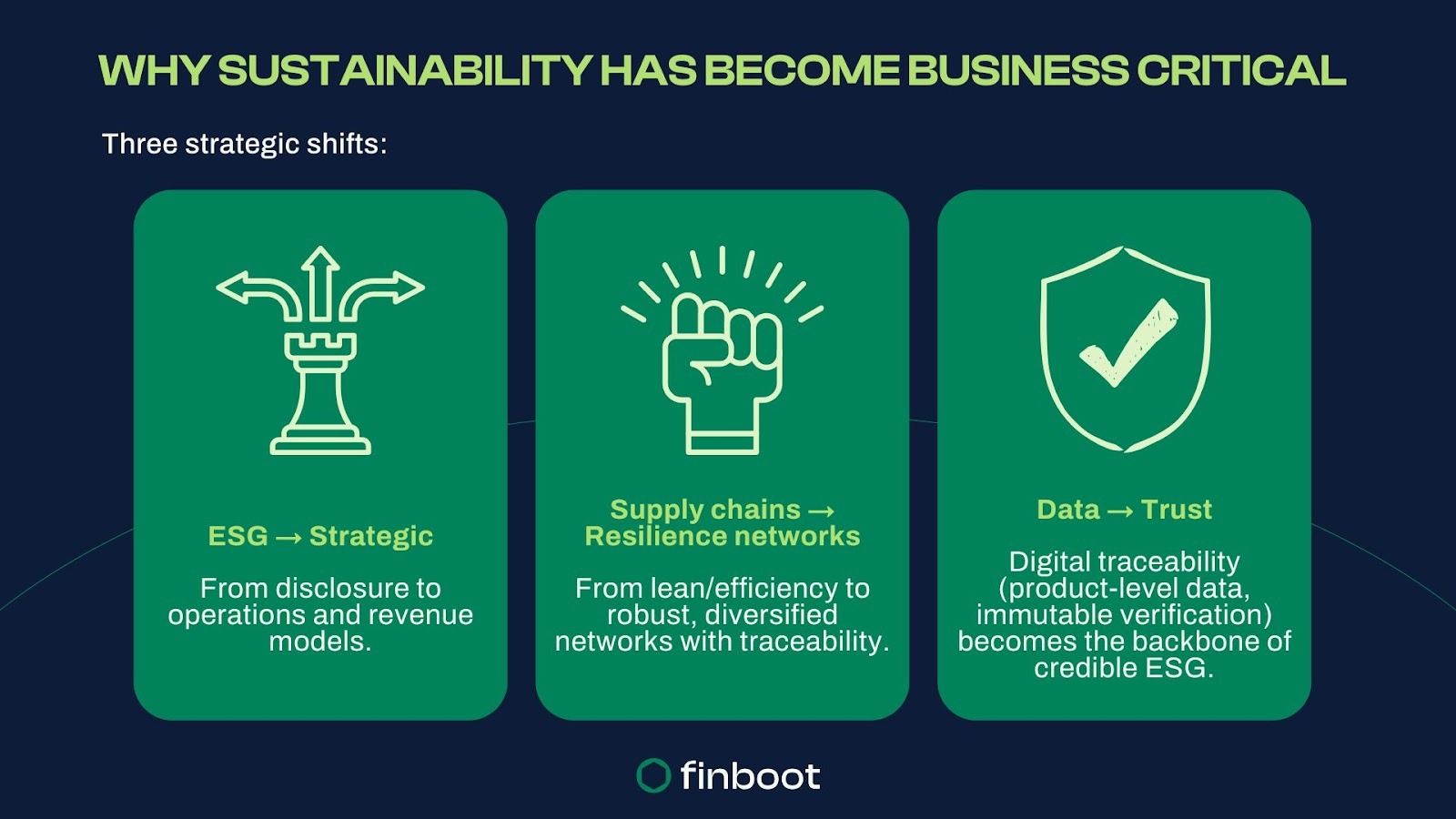
Three strategic shifts:
The European Context: Regulatory Leadership Drives Global Standards
The European Union's Green Deal represents the most ambitious regulatory framework for sustainability transformation in global business history. Its scope extends far beyond European borders, creating de facto global standards for companies operating in international markets. Understanding and preparing for these requirements isn't just about compliance—it's about positioning for competitive advantage in the sustainability economy.
The regulatory landscape includes interconnected directives that collectively reshape how businesses approach environmental responsibility. Some key examples are:
Together, these regulations foster a transparent and traceable regulatory ecosystem, rewarding proactive environmental management and driving sustainability across the entire product lifecycle, from design to recovery.

Strategic Opportunity in Transformation
While regulatory compliance drives initial action, the real opportunity lies in transforming sustainability from cost center to value creator. Organizations that approach Green Deal requirements strategically can achieve multiple benefits: reduced operational costs through resource efficiency, enhanced brand reputation through stakeholder trust, improved talent attraction through purpose alignment, and sustainable competitive advantage through early-mover positioning.
+++
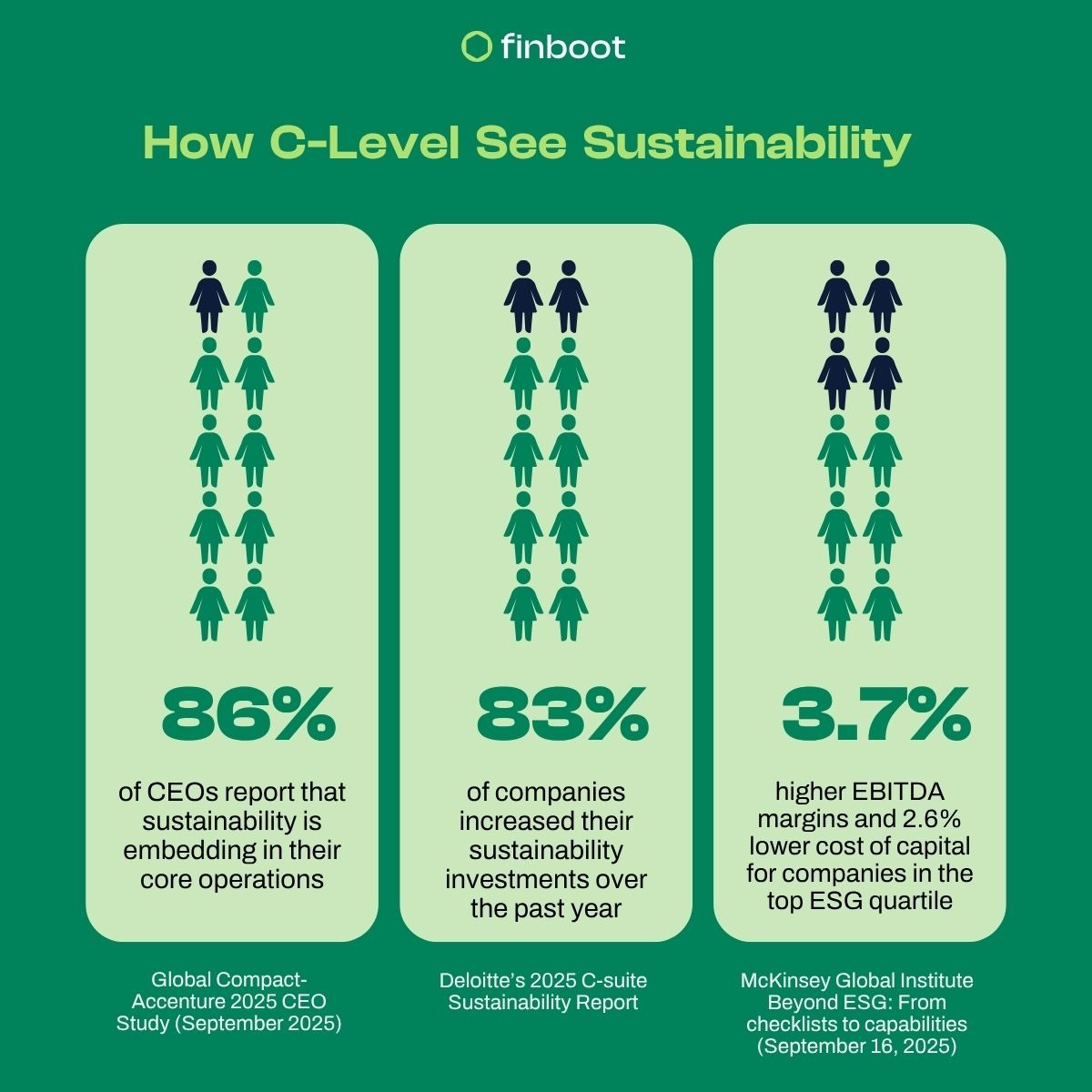
Recent Global Compact-Accenture 2025 CEO Study (September 2025) reveal that over 86% of CEOs report that sustainability is embedding in their core operations, and 66% believe the private sector can drive significant progress by linking sustainability to strategy and executive compensation—a recognition that environmental stewardship has become essential for long-term business success.
According to Deloitte’s latest C-suite Sustainability Report, 83% of companies increased their sustainability investments over the past year, even as stakeholder pressure fell.
McKinsey research indicates that at the enterprise level, companies in the top quartile for ESG performance demonstrate 3.7% higher EBITDA margins and 2.6% lower cost of capital compared to bottom-quartile peers. The period from 2024 to 2030 represents a pivotal window where early movers will establish lasting competitive advantages through strategic alignment with Green Deal objectives.
Even with recent adjustments from the Omnibus Package, companies are still required to implement strong digital traceability systems to meet the evolving demands of green supply chains.
Climate inaction poses significant financial risks for businesses, with potential profit losses of 5-25% by 2050 due to supply chain disruptions, increased operational costs, and reputational damage. Conversely, investing in climate adaptation now offers a high return, saving $2-$19 for every $1 spent. Additionally, evolving carbon pricing and regulations will impose substantial costs on companies that fail to decarbonize, especially in heavy industries. Proactive climate action is crucial for future profitability and competitive advantage.
The next five years demand bold strategic realignment. Companies must move beyond reactive compliance toward proactive value creation, leveraging digital technologies like blockchain-based traceability to build transparent, resilient supply chains that exceed regulatory requirements while delivering measurable business value.
This playbook provides the strategic framework and operational guidance necessary to capture these opportunities while managing regulatory requirements effectively.
The European Green Deal has evolved from an ambitious policy framework into a business-critical reality that demands immediate strategic attention. Since its launch in December 2019, this transformative agenda has fundamentally altered the competitive landscape, creating both unprecedented challenges and remarkable opportunities for forward-thinking organizations.
The initial €1 trillion investment commitment signaled unprecedented political will, yet implementation has revealed the intricate challenges of coordinating 27 member states while managing economic disruptions from the pandemic and geopolitical tensions.
European Environment Agency data shows meaningful progress on emissions reduction, with the EU achieving approximately 34% reduction from 1990 levels by 2023. Biodiversity targets prove more challenging, however, with only 15-30% of protected habitats showing favorable conservation status.
The circular economy transition faces practical obstacles despite policy support. Recycling rates have improved, yet the broader shift toward product longevity and material efficiency progresses slowly.
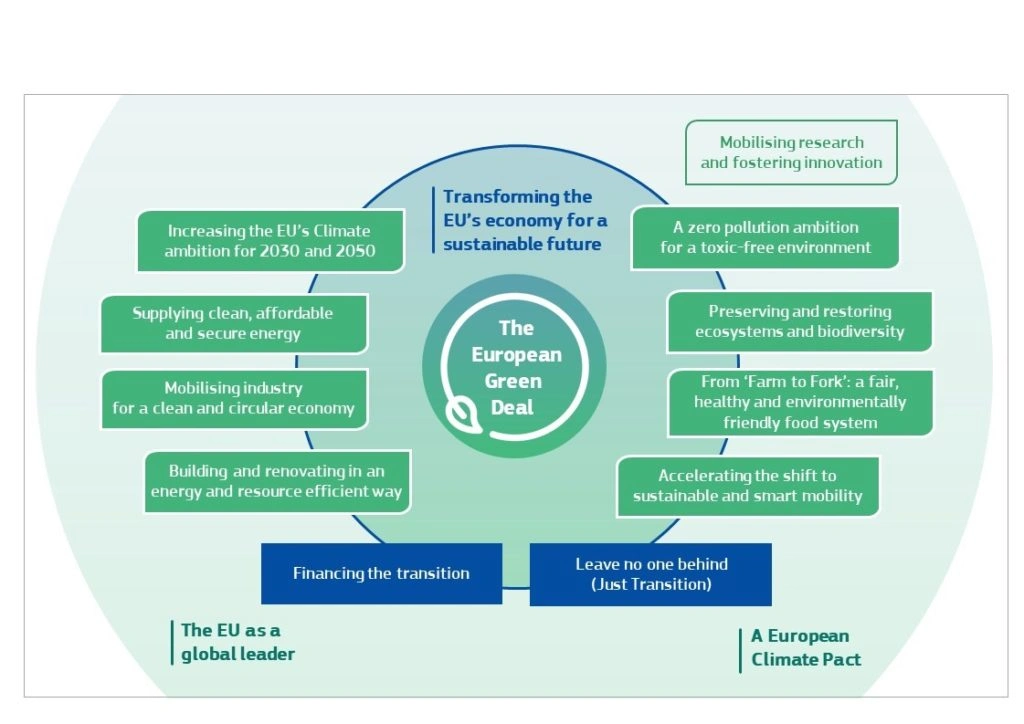
Key legislative achievements demonstrate substantial progress. The European Climate Law established legally binding climate neutrality by 2050, while the Fit for 55 package introduced comprehensive reforms across climate, energy, and transport sectors. The Just Transition Fund’s €17.5 billion allocation and InvestEU’s €279 billion in green project funding created substantial financial infrastructure for transformation.
However, implementation challenges have been equally significant. Administrative complexities have created varying adoption speeds across member states, while economic pressures from inflation and energy crises have strained green investment priorities. The EU Deforestation Regulation (EUDR) delay discussions exemplify these tensions, as small and medium enterprises struggle with geographic information requirements and compliance timelines.
Sector-specific impacts reveal the Deal’s far-reaching implications. Energy companies face grid modernization imperatives and renewable integration challenges, requiring massive infrastructure investments. Manufacturing organizations confront CBAM compliance requirements while simultaneously pursuing process efficiency improvements. Agricultural businesses must adopt sustainable practices and emission reduction strategies, often requiring complete operational overhauls.
The business response has been mixed but increasingly sophisticated. Leading organizations have moved beyond compliance toward strategic integration, recognizing that Green Deal alignment offers competitive advantages in customer preference, investor relations, and operational efficiency. Early sustainability leaders demonstrate clear business benefits. These companies report 12-15% cost savings through resource efficiency and command 18% higher valuation multiples compared to industry peers, according to McKinsey analysis.
Smart organizations understand that Green Deal compliance extends beyond checking regulatory boxes. Companies that invest in digital solutions for environmental data collection, verification, and reporting build strong foundations for both compliance and value creation in today's sustainability-focused business environment.
Looking toward 2025, the implementation trajectory suggests continued complexity but growing clarity. Streamlined administrative procedures and enhanced coordination mechanisms are emerging, while business adaptation strategies are maturing. The organizations that have invested early in digital monitoring systems, circular economy technologies, and workforce training are positioning themselves advantageously for the next phase of Green Deal evolution.
EXTRA RESOURCE:
Under the Green Deal, a great deal of new legislation is being proposed, revised or already enacted. This document by CircuLaw helps you assess implementation status of each law as well as gives a direct link to the actual official language for each policy.
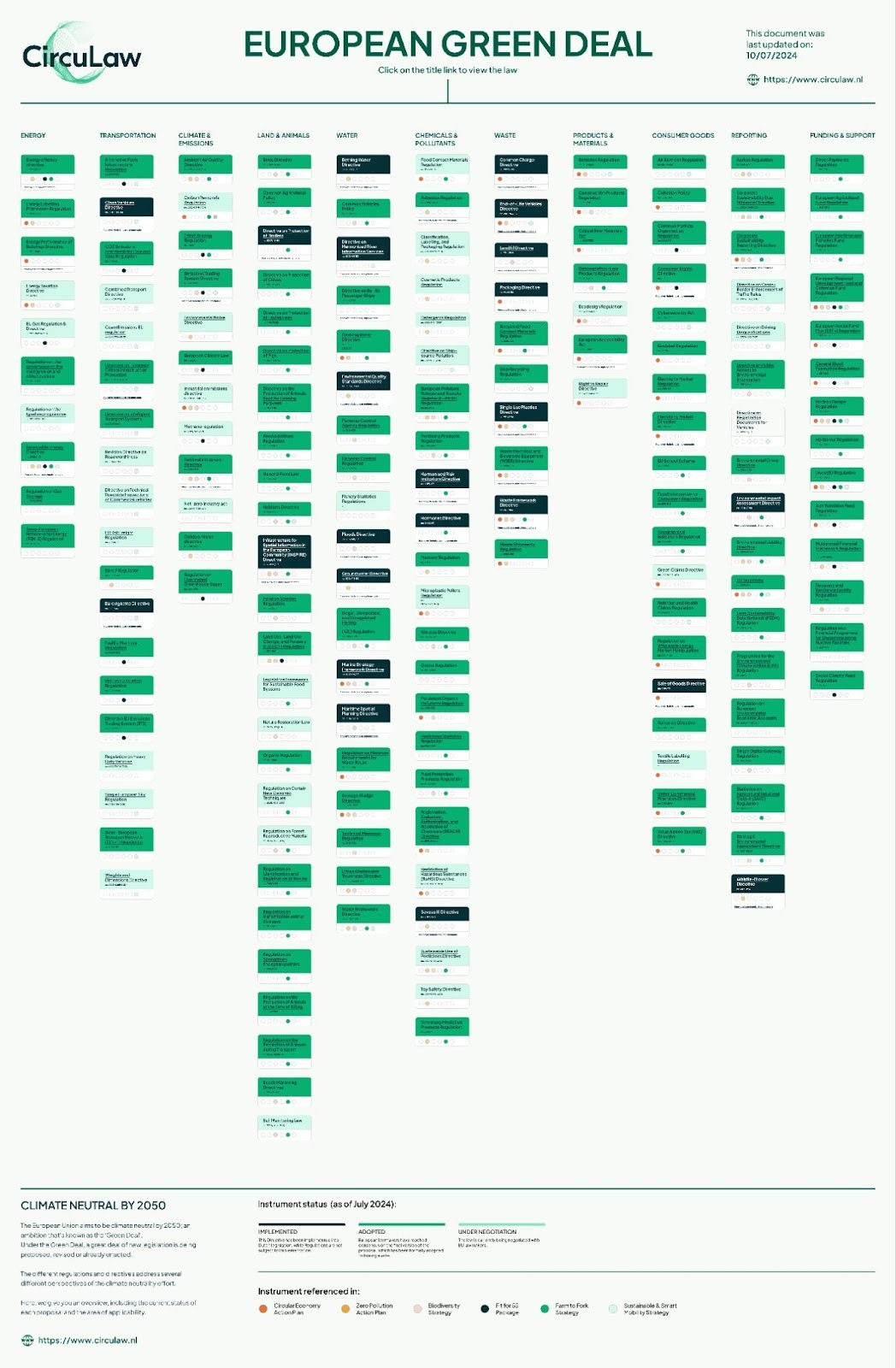
Key takeaway: map which regulations apply to your product lines, quantify exposure (revenue, suppliers, regions), and start short-listing critical supplier nodes that require traceability and verification.
Regulatory frameworks rarely remain static, and the EU Green Deal proves no exception. The introduction of Omnibus Packages marks a critical inflection point in Green Deal implementation, representing the EU’s recognition that regulatory complexity was hindering rather than accelerating sustainable transformation.
These legislative bundles aim to streamline compliance requirements while maintaining environmental ambition, creating more navigable pathways for business adaptation.
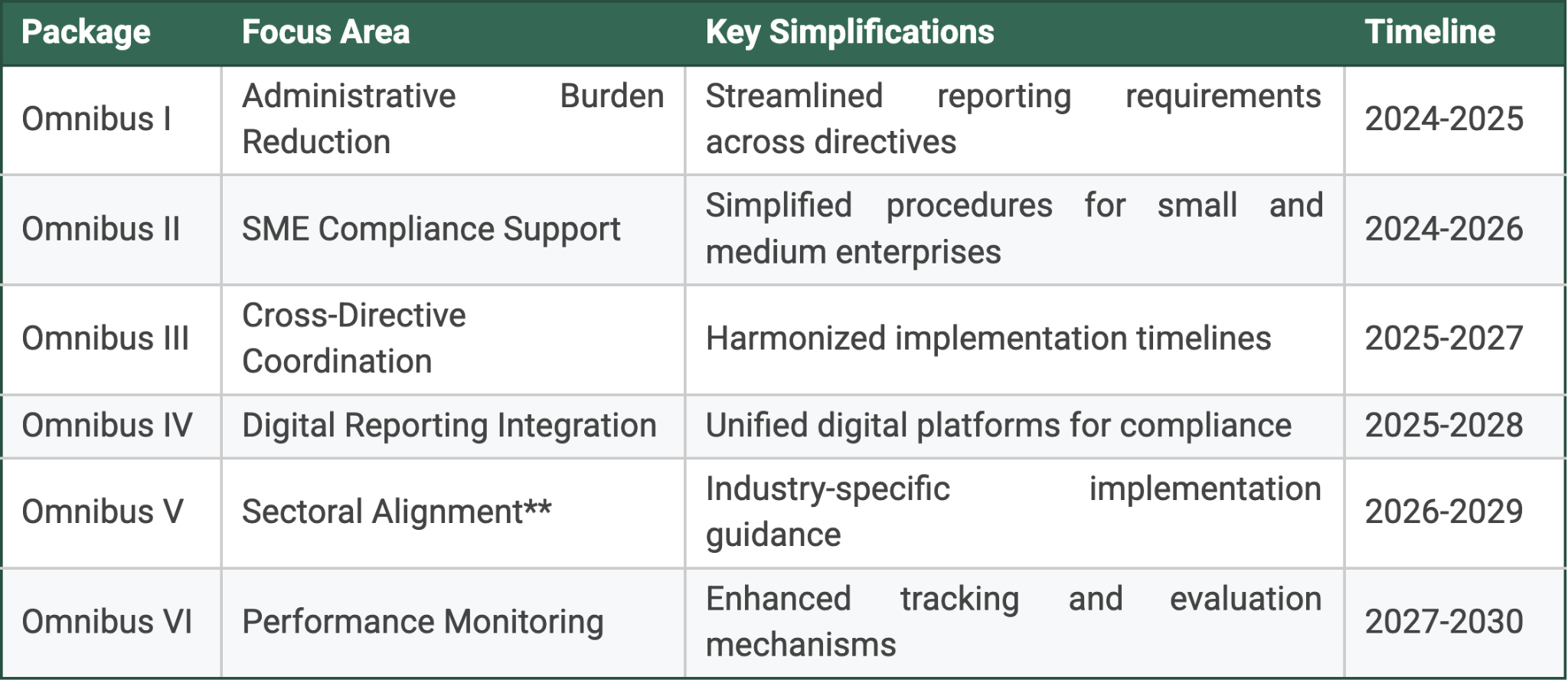
The simplification approach addresses three primary pain points identified through stakeholder consultation:
Rather than abandoning environmental standards, the packages focus on implementation efficiency, recognizing that regulatory clarity accelerates rather than impedes sustainable business practices.
For supply chain leaders, the Omnibus approach offers particular advantages in harmonizing reporting requirements across different environmental directives. Previously, organizations faced overlapping documentation demands from various regulations, creating inefficient compliance processes. The streamlined approach consolidates these requirements, enabling more strategic resource allocation toward actual sustainability improvements rather than administrative management.
The EUDR delay discussions within this context reveal pragmatic policy evolution. Rather than weakening deforestation prevention objectives, the extended timeline (large companies from December 2024 to December 2025, and small businesses in 2026) acknowledges implementation realities while providing businesses additional preparation time. This approach demonstrates regulatory maturity, balancing environmental urgency with business feasibility.

Strategic implications for C-level executives center on timing and preparation. The simplification era creates opportunities for proactive compliance investment, as clearer requirements enable more precise strategic planning. Organizations that leverage this clarity window to build robust sustainability infrastructure will achieve competitive advantages when full implementation occurs.
The period ahead requires strategic patience combined with tactical preparation. While simplified requirements reduce immediate compliance pressure, they also create higher expectations for substantive environmental performance. Organizations must use this breathing room to build genuine sustainability capabilities rather than merely improving reporting processes.
Regulatory pressure is forcing businesses to reimagine their sustainability strategies entirely. What started as compliance requirements has evolved into something far more significant—strategic opportunity.
The current business environment demands fundamental organizational transformation as companies navigate the intersection of regulatory pressure, stakeholder expectations, and competitive dynamics. This transformation extends far beyond compliance management to encompass strategic repositioning, operational redesign, and cultural evolution.
The evolution of Environmental, Social, and Governance (ESG) practices represents one of the most significant strategic shifts in modern business history. Organizations are discovering that ESG excellence creates measurable competitive advantages across multiple dimensions: customer preference, investor relations, talent attraction, operational efficiency, and risk management.
Research demonstrates that companies achieving dual excellence in ESG integration and operational performance show 2.1x higher revenue growth compared to peers. This performance differential reflects ESG’s transformation from cost center to value creator, as sustainability initiatives drive innovation, efficiency improvements, and market differentiation.
The competitive advantage framework reveals four distinct phases of ESG evolution. Compliance-focused organizations achieve basic risk mitigation but miss value creation opportunities.
Supply chain transformation exemplifies this evolution.
This shift reflects recognition that supply chain disruptions create far greater costs than efficiency optimization can offset. Supply chain thinking has undergone a complete reorientation. Where efficiency once ruled decision-making, resilience and transparency now drive strategy. Companies need traceability systems that monitor environmental impacts across their entire global networks—a requirement that demands sophisticated technology solutions.
The Gartner's Digital Value Framework provides practical guidance for this transformation. Four pillars define sustainability success according to Gartner's research: visibility, accountability, circularity, and innovation. And Digital Product Passport stands as the enabling technology that supports each pillar, creating the infrastructure necessary for modern sustainability management.
Organizations implementing digital twin integration achieve 25-30% reductions in planning time and 15-20% improvements in forecast accuracy. Advanced analytics deliver 40% better visibility into scope 3 emissions and 20% waste reduction. Automation reduces manual processes by 35% while improving disruption response speed by 50%. Blockchain integration enables 100% product traceability while reducing verification time by 60%.
Product passport evolution illustrates the convergence of regulatory compliance and competitive advantage. Digital product passports tracking material composition, carbon footprint, supply chain history, and end-of-life instructions enable enhanced recycling efficiency, better environmental impact assessment, improved transparency, and circular economy enablement. Organizations implementing these systems gain regulatory compliance while building customer trust and operational insights.
The strategic imperative for C-level executives involves recognizing ESG as a core business strategy rather than peripheral compliance function. This requires investment in digital infrastructure, stakeholder engagement capabilities, and measurement systems that demonstrate value creation rather than merely cost management.
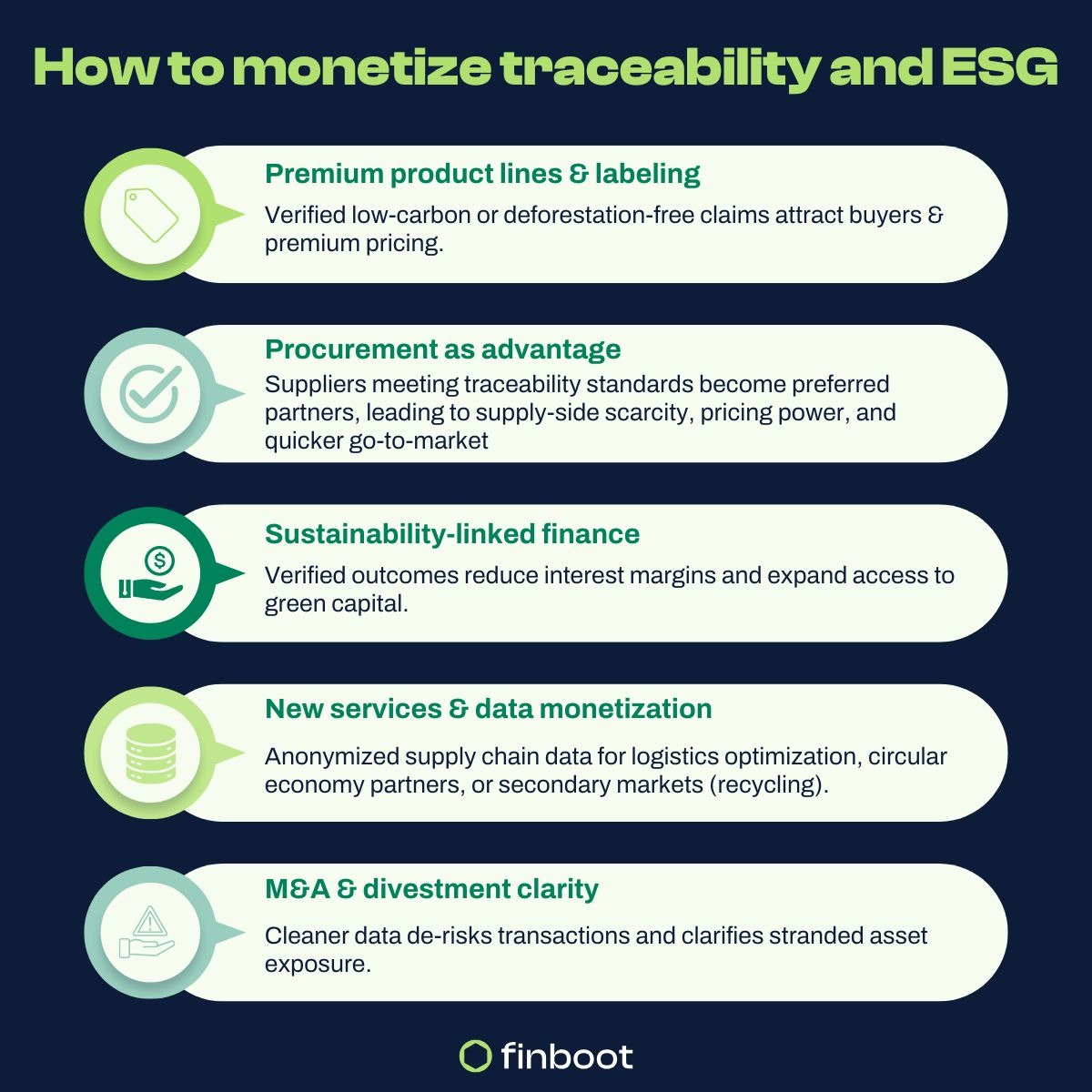
How to monetize traceability and ESG:
The period from 2026 to 2030 represents a critical window for strategic positioning as Green Deal implementation accelerates and competitive dynamics crystallize. Organizations must balance immediate compliance requirements with long-term value creation opportunities, requiring sophisticated strategic planning and resource allocation.
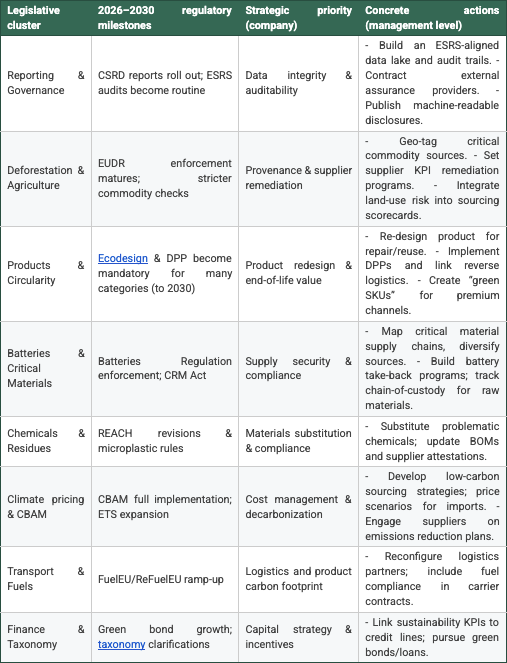
Between 2026 and 2030 the legislative framework will shift from establishing standards to active enforcement and performance evaluation. Companies must therefore prioritize scalability of traceability, assurance mechanisms, product re-engineering and finance alignment. The table below links legislative timelines to concrete management priorities and actions.
Technology integration priorities center on building scalable, interoperable systems that address multiple compliance requirements while generating operational value. Artificial intelligence and machine learning capabilities will become essential for managing complex sustainability data and optimizing resource utilization. Internet of Things (IoT) sensors will enable real-time monitoring and predictive maintenance, reducing environmental impact while improving operational efficiency.
Supply chain resilience will require fundamental architectural changes as organizations move from linear to network-based models. Multiple sourcing options, dynamic routing capabilities, and adaptive planning systems will become competitive necessities. Digital platforms enabling real-time visibility and collaboration across supply networks will differentiate leaders from laggards.
Investment priorities must balance immediate compliance needs with long-term competitive positioning. Infrastructure investments in clean energy, digital monitoring systems, and circular economy technologies will generate both regulatory compliance and operational benefits. Workforce development programs focusing on sustainability skills and digital capabilities will become essential for organizational transformation.
Strategic partnerships will play increasingly important roles as no single organization can master all required capabilities independently. Collaboration with technology providers, sustainability consultants, and industry peers will accelerate transformation while reducing individual investment requirements. Ecosystem development approaches will create shared value while building competitive moats.
The measurement and reporting evolution will emphasize outcome-based metrics rather than process compliance. Organizations must develop sophisticated analytics capabilities that demonstrate environmental impact reduction, social value creation, and governance excellence. These capabilities will become essential for stakeholder communication and strategic decision-making.
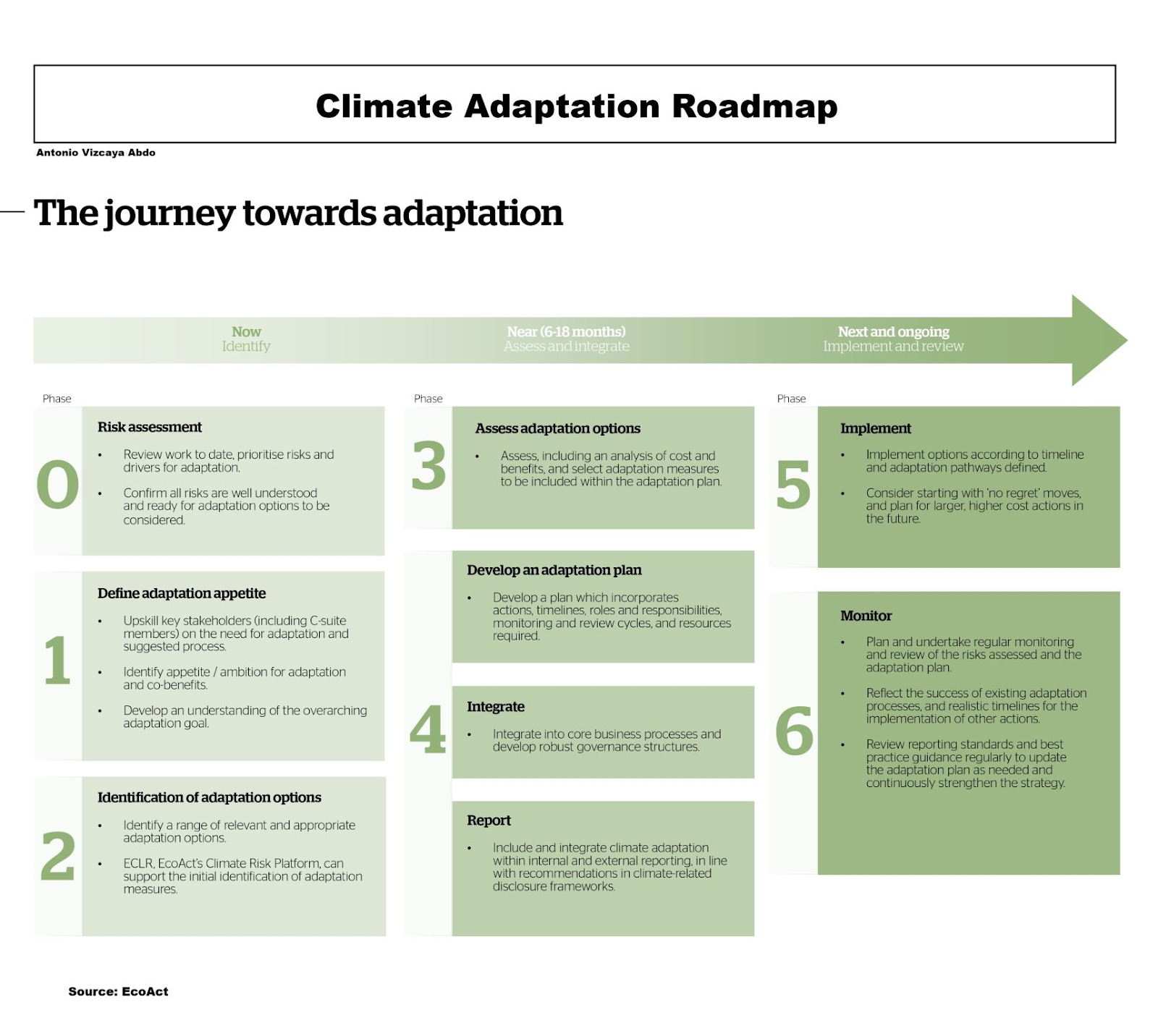
Organizations need to update risk management for climate financial risks, supply chain disruptions, and regulatory changes. Scenario planning is vital for quick adaptation and operational continuity. Climate adaptation is crucial for resilience, benefiting ecosystems, supply chains, and communities. Disclosure frameworks like IFRS S2, CSRD, and TPT now require adaptation information, as investors prioritize climate resilience.
EcoAct's roadmap provides a structured guide to adaptation, simplifying complex climate risks into clear phases:
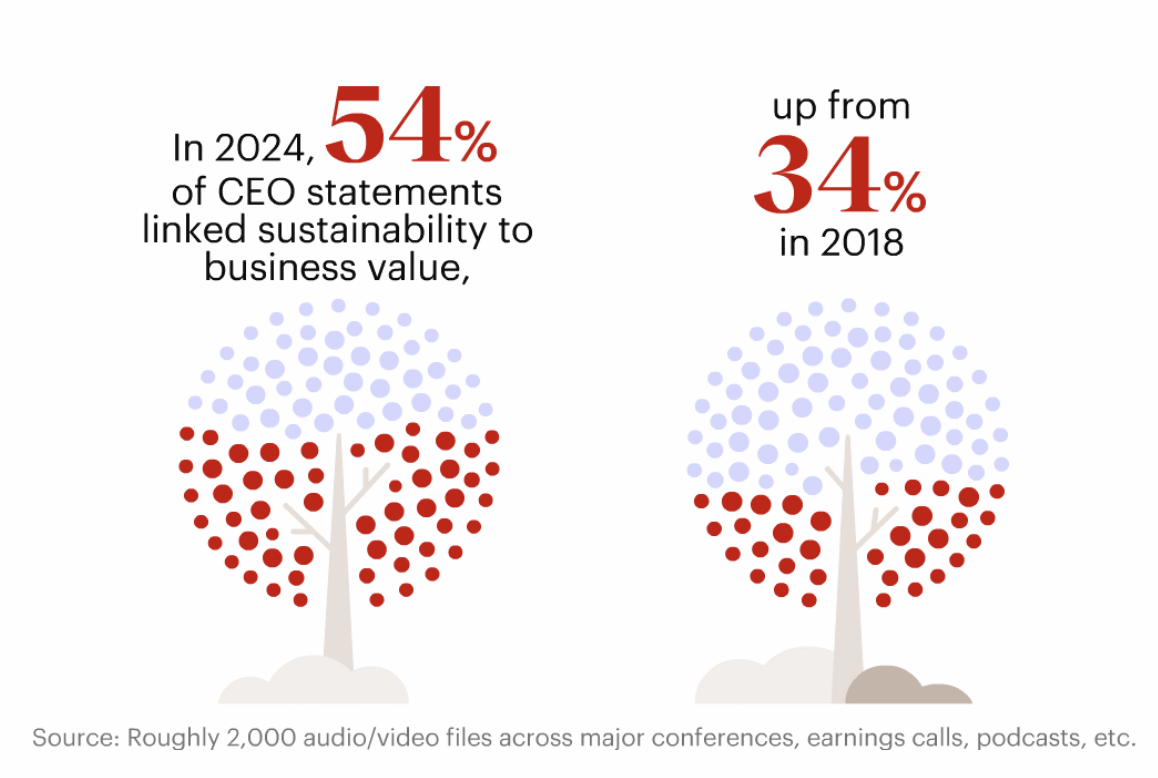
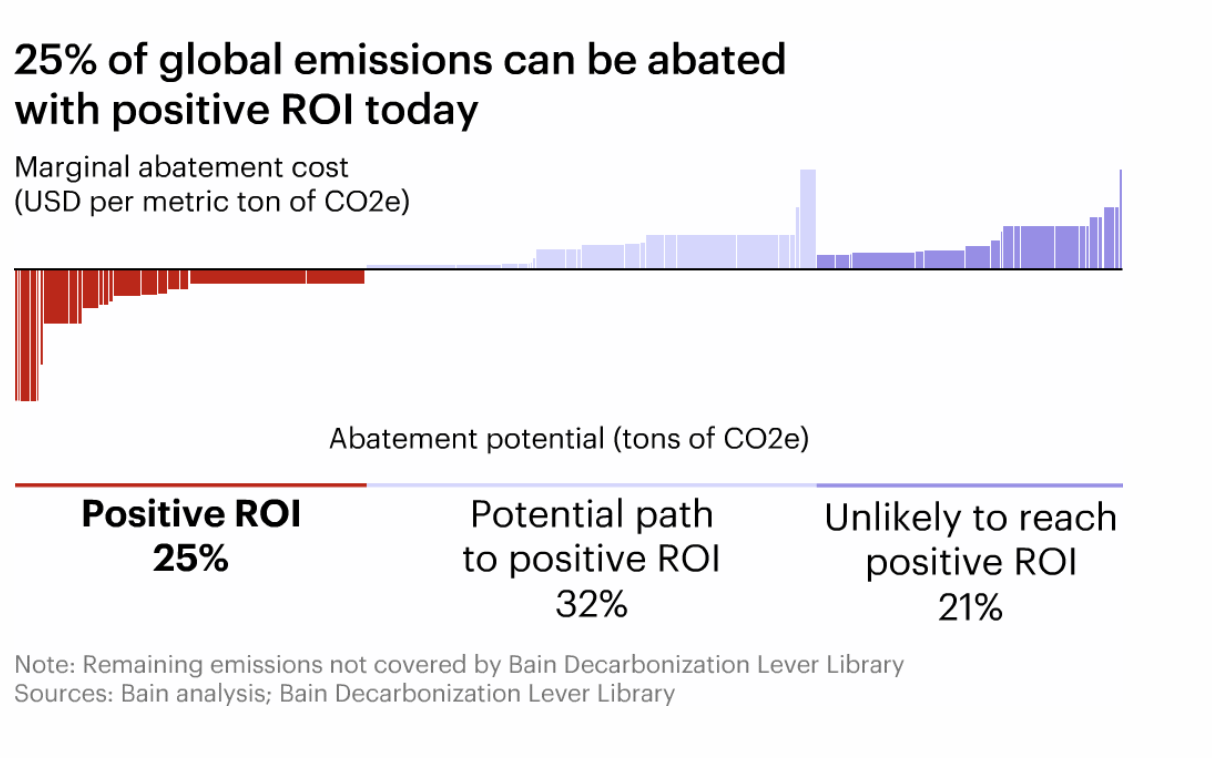
Corporate sustainability is evolving from aspirations to concrete, value-driven execution, becoming a central pillar for competitive advantage. CEOs are prioritizing verifiable actions, recognizing the link between sustainable practices and business benefits. This shift is driven by commercial imperatives, with sustainability becoming a key differentiator in the B2B sector, leading to new opportunities and resilient supply chains. Decarbonization offers significant economic incentives, with up to 25% of industrial CO2 emissions reducible with a positive ROI, challenging the perception of environmental initiatives as mere cost centers. Supply chain focus is transforming from efficiency to resilience, driven by Scope 3 emissions management and environmental regulations. Finally, AI is crucial for optimizing sustainability efforts, but its energy consumption requires careful management to ensure it enhances, rather than detracts from, environmental goals.
The Green Deal era creates unprecedented opportunities for organizations that approach sustainability strategically rather than reactively. These opportunities span new market creation, operational optimization, stakeholder relationship enhancement, and competitive positioning improvement.
Innovation-driven growth opportunities emerge from sustainability challenges that demand creative solutions.
Market access advantages accrue to organizations demonstrating genuine sustainability leadership.
Operational excellence opportunities center on resource optimization and process improvement.
Digital transformation enables multiple value creation mechanisms simultaneously.
Brand value enhancement represents a significant but often underestimated opportunity.
The key to capturing these opportunities lies in strategic integration rather than tactical implementation. Organizations must embed sustainability considerations into core business processes, strategic planning, and performance measurement systems. This integration approach ensures that sustainability initiatives generate business value rather than merely meeting compliance requirements.
Timing considerations favor early movers who can establish market positions before competitive dynamics intensify. The current regulatory clarity window provides opportunities for strategic investment and capability building that will become more difficult as compliance deadlines approach and competitive pressure increases.
As we mentioned, digital traceability platforms provide the mechanism for collecting, validating and delivering regulatory-grade evidence. Finboot’s MARCO Track & Trace fits into the MVT stack as the verification and ledger layer that:
How to evaluate traceability vendors (checklist):
A “Green Deal Compass Mindset” represents a fundamental shift in corporate culture and strategic thinking. This approach moves beyond reactive compliance toward proactive value creation, embedding sustainability considerations into every aspect of organizational decision-making and performance management, encompassing three core principles: continuous monitoring, proactive adaptation, and stakeholder accountability.
Organizations adopting this approach implement sophisticated monitoring systems that track environmental performance, regulatory changes, and stakeholder expectations in real-time. They develop adaptive capabilities that enable rapid response to changing conditions while maintaining operational continuity. They embrace accountability mechanisms that demonstrate transparency and build stakeholder trust.
Cultural transformation requirements extend throughout organizational hierarchies, from board-level governance to operational execution. Leadership teams must model sustainability commitment while providing resources and support for transformation initiatives. Middle management must translate strategic objectives into operational practices while managing change resistance. Front-line employees must understand their roles in sustainability achievement while developing new skills and capabilities.
Technology enablement becomes essential for this mindset effectiveness. Digital platforms provide real-time visibility into sustainability performance while enabling rapid response to emerging issues. Blockchain-based traceability systems like MARCO Track & Trace create immutable records of environmental performance while building stakeholder trust. AI-powered analytics identify optimization opportunities while predicting potential compliance risks.
Stakeholder engagement evolves from periodic reporting toward continuous dialogue and collaboration. Customers become partners in sustainability achievement rather than passive recipients of environmental claims. Investors participate in strategic planning rather than merely evaluating performance. Communities contribute to solution development rather than simply monitoring compliance.
Organizations that successfully implement this mindset achieve superior performance across multiple dimensions: regulatory compliance, operational efficiency, stakeholder relationships, and financial returns. They build resilient business models that thrive under regulatory pressure while creating lasting competitive advantages.
Implementation requires systematic approach combining strategic planning, operational redesign, and cultural transformation. Organizations must invest in technology infrastructure, workforce development, and stakeholder engagement capabilities while maintaining operational continuity and financial performance. This balance requires sophisticated change management and strategic patience.
The future belongs to organizations that embrace a Green Deal Compass Mindset as a core competitive strategy rather than compliance necessity. These organizations will shape industry standards, influence regulatory development, and create sustainable value for all stakeholders while achieving superior business performance in the Green Deal era.
This playbook provides strategic guidance for navigating the Green Deal transformation. Organizations seeking to implement these strategies should consider partnering with technology providers like Finboot, whose MARCO Track & Trace platform enables the digital traceability and transparency capabilities essential for Green Deal success.
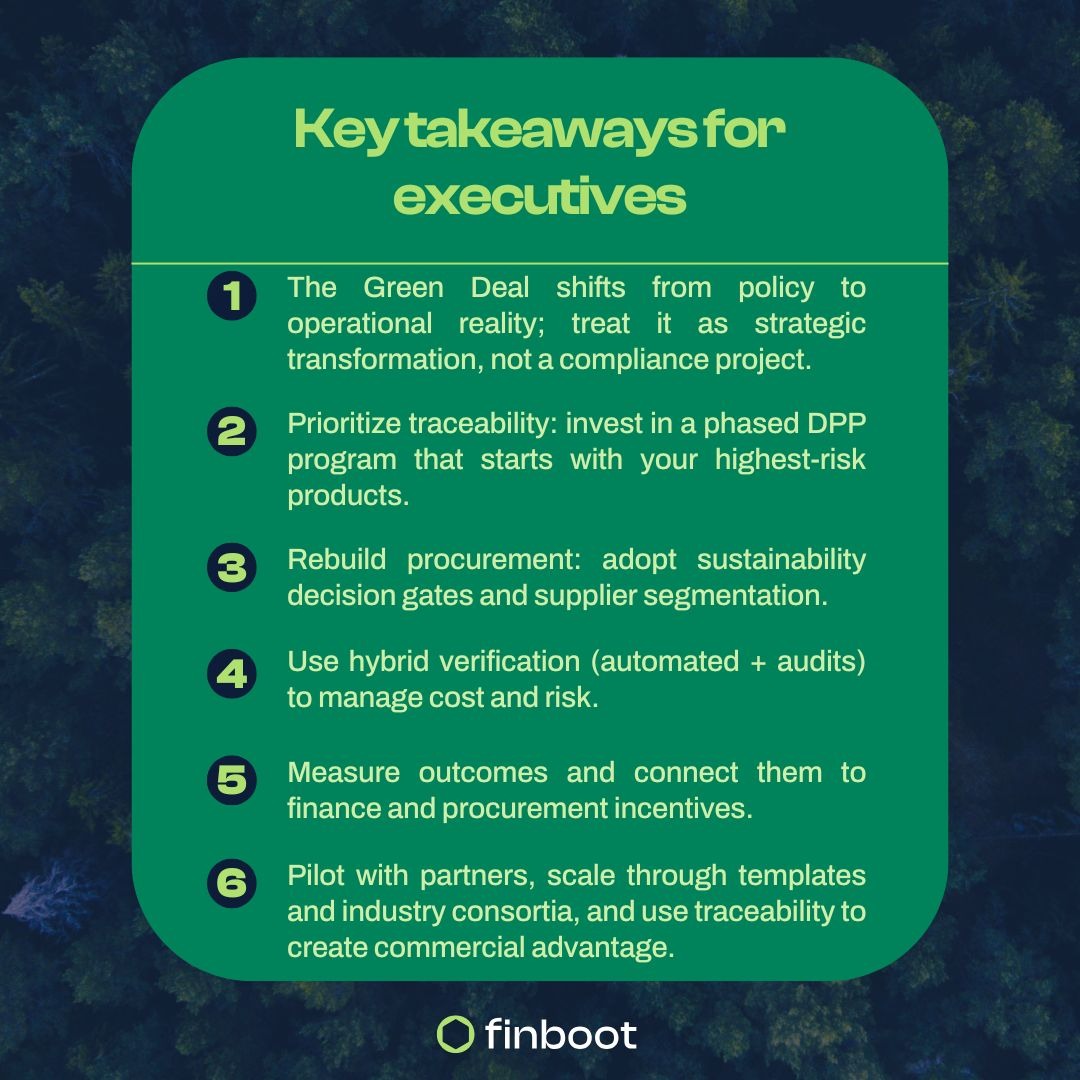
Smart CEOs are transforming EU Green Deal compliance from regulatory burden into strategic competitive advantage, positioning sustainability as a core business differentiator for 2030 success.
• Regulatory compliance drives profitability: Companies with mature ESG programs achieve 15-30% higher profitability and 20-30% higher valuations than industry peers.
• Digital traceability is non-negotiable: CSRD, CSDDD, and EUDR requirements demand robust blockchain-enabled solutions for immutable sustainability verification across supply chains.
• Market differentiation through transparency: 73% of consumers prefer brands with transparent sustainability practices, making environmental performance a premium positioning tool.
• Proactive preparation beats reactive compliance: Organizations investing in comprehensive sustainability governance and advanced traceability solutions today will capture emerging opportunities while competitors struggle with regulatory catch-up.
The most successful companies view sustainability not as a cost center but as an innovation engine that simultaneously builds brand trust, operational efficiency, and regulatory readiness for the evolving business landscape through 2030.
Q1. What are the main objectives of the EU Green Deal? The EU Green Deal aims to transform Europe into the first climate-neutral continent by 2050. Key objectives include reducing emissions by 55% by 2030, implementing a Circular Economy Action Plan, and improving biodiversity conservation efforts.
Q2. How does the Corporate Sustainability Reporting Directive (CSRD) impact businesses? The CSRD expands sustainability reporting obligations to approximately 50,000 companies, including all large EU companies and listed SMEs. It requires detailed disclosure of environmental impacts, social considerations, and governance practices according to European Sustainability Reporting Standards.
Q3. What is the Digital Product Passport and why is it important? The Digital Product Passport is an initiative that introduces product-level transparency requirements. It will initially target batteries, electronics, and textiles, requiring companies to collect, verify, and share detailed environmental data throughout product lifecycles, enhancing traceability and sustainability efforts.
Q4. How can companies leverage ESG for market differentiation? Companies with mature ESG programs can achieve 20-30% higher valuations and enhanced customer loyalty. By embedding sustainability throughout operations, businesses can use their environmental performance as a premium brand position, differentiating themselves in the market.
Q5. What role does blockchain technology play in corporate sustainability efforts? Blockchain technology offers immutable verification of sustainability claims, enabling trustworthy communication with stakeholders. It helps companies track environmental metrics throughout product lifecycles, creating auditable sustainability records and streamlining compliance with regulations like CSRD, CSDDD, and EUDR.
.svg)
.svg)

.jpg)

.jpg)


