.svg)

Why Software Is the Real Enabler of Decarbonization: From Energy Systems to Supply Chains Transparency

For years, decarbonization had been framed as an energy problem. With the solution driven by more renewables and more electrification. But this mindset was only focused on transforming the source of the resource and not the optimization of its consumption; a recent analysis from McKinsey makes a compelling point for the latter.
Software, particularly energy management systems, is emerging as the hidden catalyst of the global shift toward cleaner energy. As renewable energy scales and electricity becomes a larger share of global energy demand, managing volatility, flexibility, and optimization is no longer optional. It is foundational.
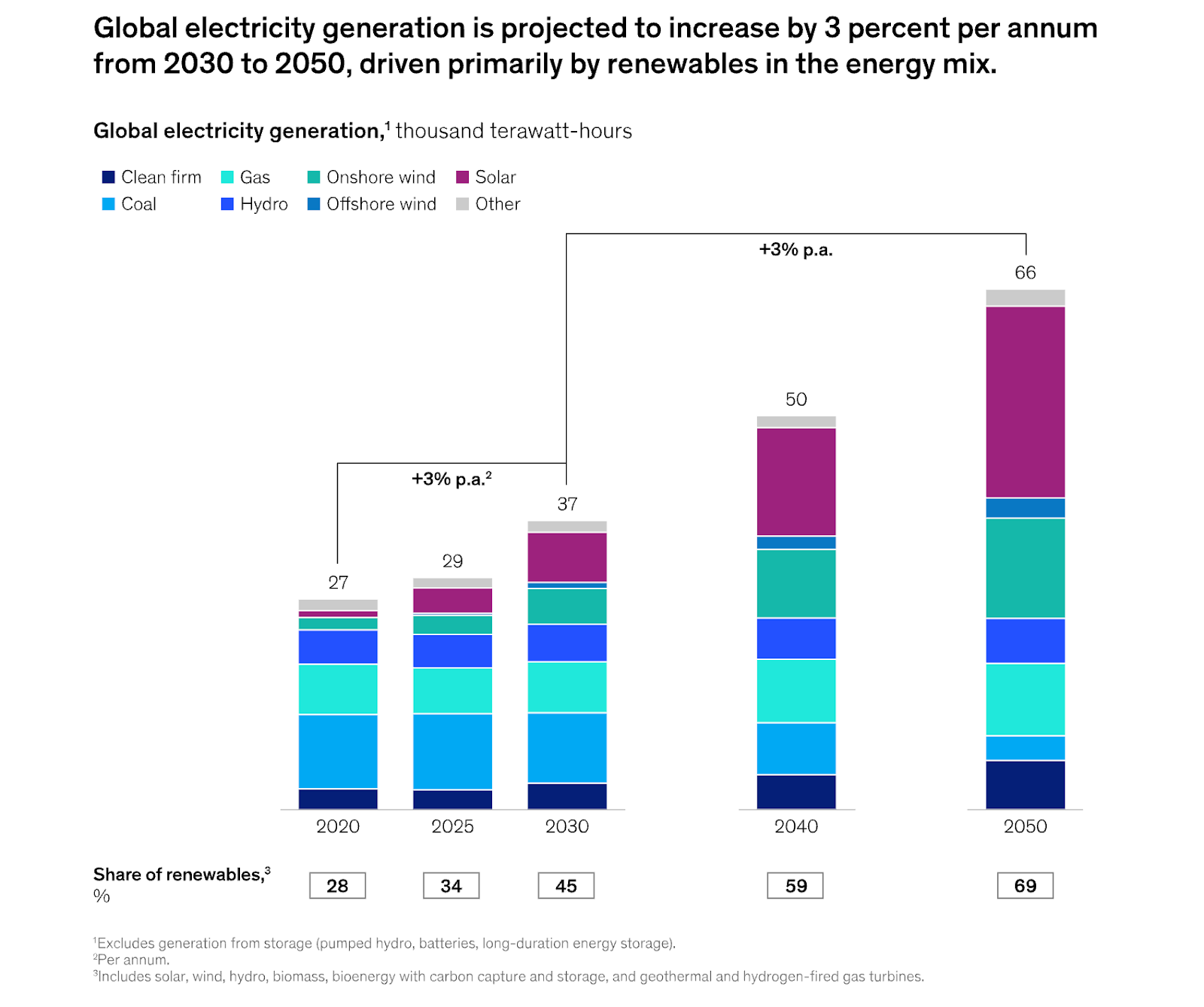
By 2040, renewable sources are expected to account for around 60% of global electricity generation, driven primarily by wind and solar. Electrification alone could reduce emissions by nearly 20% between 2024 and 2030. This is a much needed structural shift in how energy is produced; but energy is only one part of the decarbonization story.
Decarbonization is not just about replacing fossil fuels with electrons. It is about redesigning how economies source, transform, move, and verify value in a world where resources are constrained, geopolitics is volatile, and trust is fragile.
If we can learn anything from recent, and not so recent, history, it is that geopolitical events around energy (oil, gas, and other critical natural resources) shape power, trade, and stability. This will likely continue to be the case for our electrified future. The difference is that renewable energy systems — with their distributed generation, complex supply chains for critical minerals, and multi-jurisdictional sourcing — require a new kind of infrastructure to manage this complexity: digital infrastructure.
Software is what enables us to trace where materials come from, verify sustainability claims across borders, and maintain trust when physical supply chains span dozens of partners and jurisdictions. Just as energy management systems have become essential to optimize electricity consumption in real-time, digital traceability tools are becoming essential to manage the complexity of decarbonized supply chains — particularly for tracking renewable feedstocks, critical minerals, and the carbon footprint embedded in every transformation step.
From Climate Ambition to Business Risk
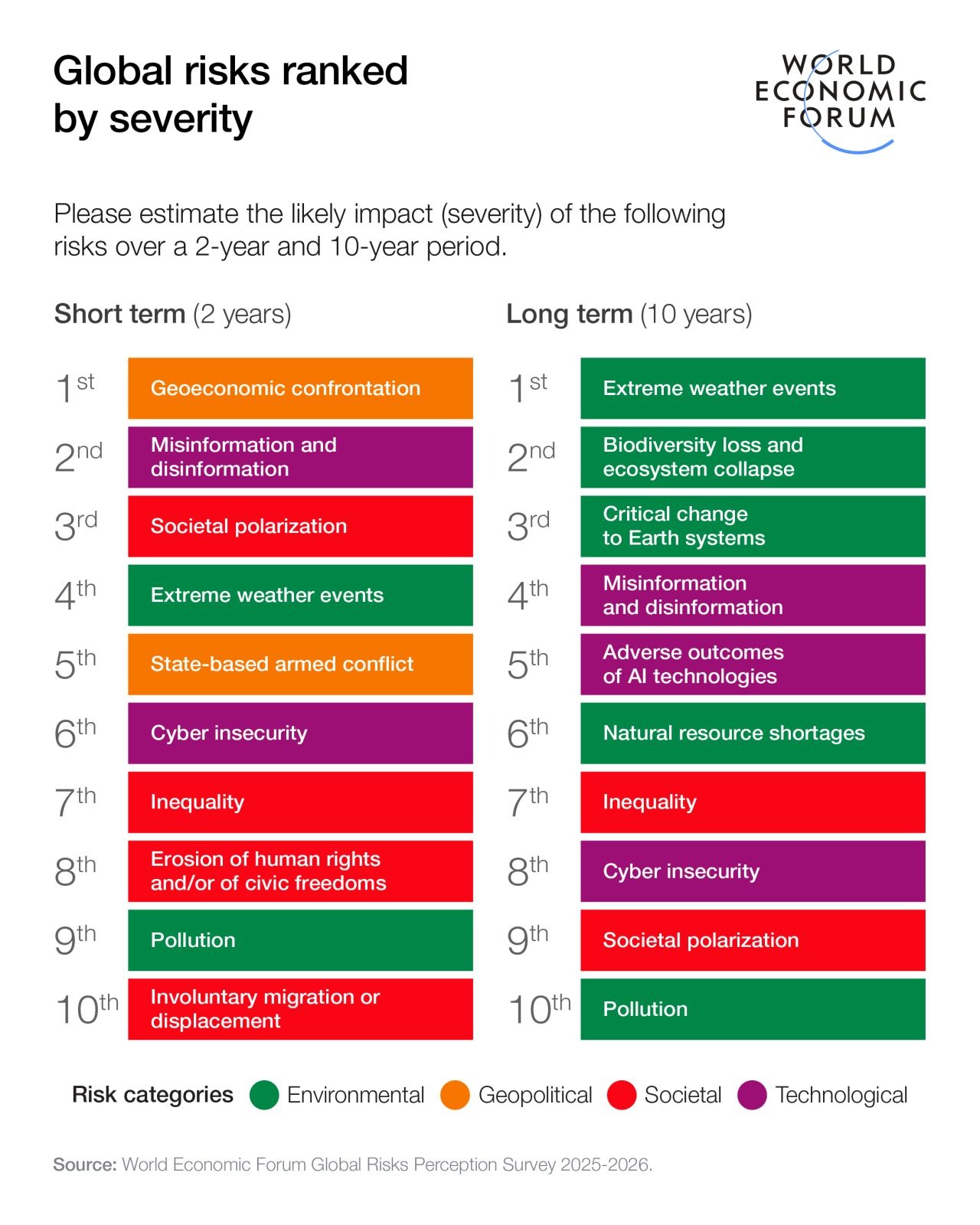
The World Economic Forum's Global Risks Report 2026 signals a critical shift in how business leaders view sustainability. Business leaders are worried about geoeconomic confrontation and misinformation in the short term, and extreme weather events and biodiversity loss in the long term.
They're business risks that directly impact supply chains, market access, capital costs, and regulatory compliance.
When weather events disrupt suppliers, when regulations demand verified sustainability claims, when investors require carbon data across your entire value chain, you need systems that provide real-time visibility and trusted data.
This is why digital traceability tools are becoming strategic infrastructure for risk management and mitigation. Just as energy management systems optimize electricity use, traceability systems help companies manage Scope 1, 2, and 3 emissions across complex global value chains — tracking renewable feedstocks, verifying mass balance, and substantiating claims.
Because sustainability is no longer a "moral" conversation. It is a conversation about business continuity, capital allocation, and long-term resilience — and it requires the right digital tools to execute.
Why Software Matters: Industrial Sectors as Part of the Solution
McKinsey makes a great point on the importance of energy management systems and their role in decarbonization. But what I explore in this article is why this matters beyond power grids.
Electrification is key, but electrons alone are not enough to meet our decarbonization goals, especially in hard-to-abate industrial sectors. Meaningful progress requires a broader energy mix (hydrogen, bioenergy, or recycled materials) and circular supply-chain strategies that address both emissions and resource efficiency.
Considering its significant need for energy, the industrial sector is often seen as the core responsible of the climate crisis, rather than as a crucial actor as part of the solution.
This matters because capital intensive sectors (like oil & gas, chemicals, steel, cement, manufacturing) are where the decarbonization challenge is most acute. And these sectors share something critical with the broader supply chain challenge: they require verified data, transparency across complex processes, and trust in the attributes being tracked.

The lesson from energy management systems extends far beyond the factory gate or the building meter.
If software is essential to manage the complexity of distributed energy systems, the same logic applies, and perhaps even more urgently, to the broader challenge of industrial decarbonization and supply chain transparency.
The real complexity sits across global supply chains, multi-tier sourcing networks, mass balance models, regulatory regimes, and sustainability claims that must be verified, not asserted. When we move beyond the boundaries of a single site or grid connection, many decarbonization strategies begin to lose coherence.
Supply chains remain fragmented. Sustainability data is scattered across organizations and systems that were never designed to work together. Claims are made upstream that cannot be verified downstream. Decisions are delayed because confidence in the data is missing.
This is where many decarbonization strategies begin to break down.
Companies invest heavily in measuring emissions, only to discover that data is fragmented across systems and partners, assumptions cannot be verified, claims cannot be defended, and decisions are made too late.
You cannot decarbonize what you cannot trace, contextualize, and trust.

Beyond Carbon Accounting: From Reporting to Operating
Carbon accounting has become a central focus, and rightly so. Regulation demands it. Investors expect it.
But on its own, it is insufficient.
Carbon data is often backward-looking, aggregated, and disconnected from operational decisions. It tells us what has already happened, often too late to influence outcomes.
Decarbonization, in practice, happens through thousands of daily choices: which supplier to source from, which feedstock to prioritize, which process to adjust, which claim can be made (and which cannot).
This is where software becomes transformative: not as a reporting layer, but as operational infrastructure.
Transparency enables optimization. Trusted data enables action. Systems enable scale.
Decarbonization accelerates when sustainability data is embedded directly into how supply chains operate, not added at the end.
Traceability as Strategic Infrastructure
At Finboot, we see this shift clearly, particularly in the hard-to-abate industrial sectors where the challenge is most acute.
Digital traceability is no longer a niche requirement driven by regulation alone. It is becoming core infrastructure for managing risk, trust, and resilience in complex industrial ecosystems.
Just as McKinsey highlights the importance of digital twins for optimizing energy use in production processes, we use digital twins in our blockchain-based traceability solutions to enhance supply chain transparency. These digital twins enable companies to back up sustainability claims — including carbon footprint, mass balance integrity, and digital product passports — with verifiable data at every transformation step.
When traceability is treated as infrastructure rather than as a compliance layer, its impact changes fundamentally. Transparency stops being a communications exercise and becomes a management capability. Sustainability data stops being cosmetic and becomes strategic.
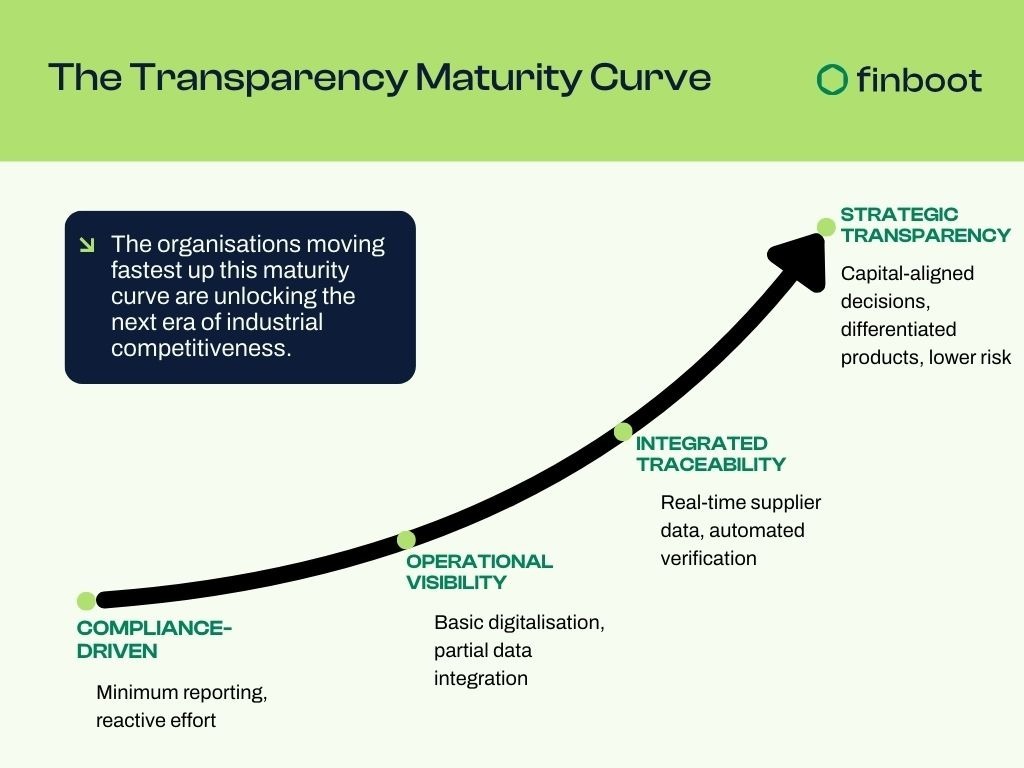
Traceability enables companies to verify sustainability claims with confidence, maintain data integrity across transformations, respond faster to regulatory and market demands, and reduce exposure to sourcing, compliance, and reputational risk.
Most importantly, it creates a single source of truth across organizations that do not fully control their value chains.
This is not about technology for its own sake. It is about governance.
In an environment where resources are contested, regulation is accelerating, and markets reward credibility over promises, trust and transparency become strategic assets.
Energy, Supply Chains, and the Next Phase of Decarbonization
McKinsey is right: software is the hidden catalyst for decarbonization.
At Finboot, we see this reality daily in our work with companies operating in complex value chains involving renewable feedstocks, bio-based products, and regulated materials. In these sectors, the challenge is rarely a lack of data. The challenge is fragmentation, inconsistency, and trust.
When we implement a digital traceability backbone, the transformation goes beyond better reporting:
- Data can be shared securely across partners.
- Sustainability attributes can be verified at each step.
- Claims can be substantiated, not assumed.
- Decision-makers gain real-time visibility into risk and performance.
The result is better control, better decisions, and greater trust across the ecosystem. This is what software enables when it is designed as infrastructure, not as a dashboard — when it serves as the connective tissue between operational reality and strategic intent.
Decarbonization will not be delivered by isolated tools or standalone metrics. It will be delivered by integrated digital infrastructures that connect energy, materials, data, and trust across organizational boundaries.
Electrification without traceability creates blind spots. Renewables without governance create volatility. Ambition without systems creates risk.
The organizations that succeed will be those that treat decarbonization as a systems redesign challenge, not a compliance exercise.
And just to wrap this up…From where I sit, three principles are becoming clear:
- Decarbonization is a data strategy. Not because data is fashionable, but because decisions without trusted data are liabilities. In hard-to-abate sectors — chemicals, steel, cement, biofuels — the ability to trace feedstock origins, verify transformation processes, and substantiate sustainability claims determines which companies can compete in increasingly regulated markets. Companies that recognize this are already moving beyond compliance toward strategic resilience.
- Transparency is infrastructure. Not a communication tactic. Not a report. Infrastructure. When sustainability data is treated as a management capability rather than a reporting obligation, its strategic value becomes unmistakable. It enables faster response to regulatory requirements, reduces exposure to greenwashing risk, and creates the foundation for credible market differentiation.
- Resilience beats efficiency. The most optimized supply chain is not the most resilient one. Highly optimized supply chains may perform well under stable conditions, but they fracture under volatility. Software-enabled transparency allows organizations to balance both: 1) to adapt faster, manage risk earlier, and 2) make decisions with greater confidence when conditions change.
Geopolitics is reminding us (once again) that resources matter. Climate risk is reminding us that stability cannot be assumed. Markets are reminding us that trust has tangible value.
The companies that internalize this will not only comply faster but also they will compete better.
And in the decade ahead, that distinction will matter more than ever.
Software is not the story. But without it, none of the rest holds together. And that may be the most underappreciated reality of the decarbonization transition ahead.
.svg)
.svg)
.svg)


.jpg)

