.svg)

The 2030 C-Suite Agenda: Why CIO and CSO Alignment Will Define Industrial Competitiveness


This Wednesday, March 25, I will be in Madrid at Converge: Material Intelligence organized by PATIO Campus, speaking with industrial leaders about how artificial intelligence is reshaping the way companies design, use and recover materials. I think these conversations will echo the consistent message I’ve been hearing lately: Sustainability ambition is rising, but execution complexity is rising even faster.

The real challenge for the coming decade is not defining sustainability goals. It is aligning the digital foundations that make those goals achievable at scale. As we close in on 2030, the convergence between sustainability leadership and technology leadership is becoming one of the most decisive factors in industrial competitiveness.
From Parallel Agendas to Shared Enterprise Architecture
For many years, sustainability and digital transformation have evolved as parallel agendas. They’ve both evolved rapidly and they have both done so in the past decade. But those parallel agendas might be drifting closer together.
Chief Sustainability Officers (CSOs) focused on reporting, stakeholder expectations and regulatory readiness. Chief Information Officers (CIOs) concentrated on systems efficiency, integration and cybersecurity.
These are two clearly distinct business areas. So, what is behind this force of attraction between them?
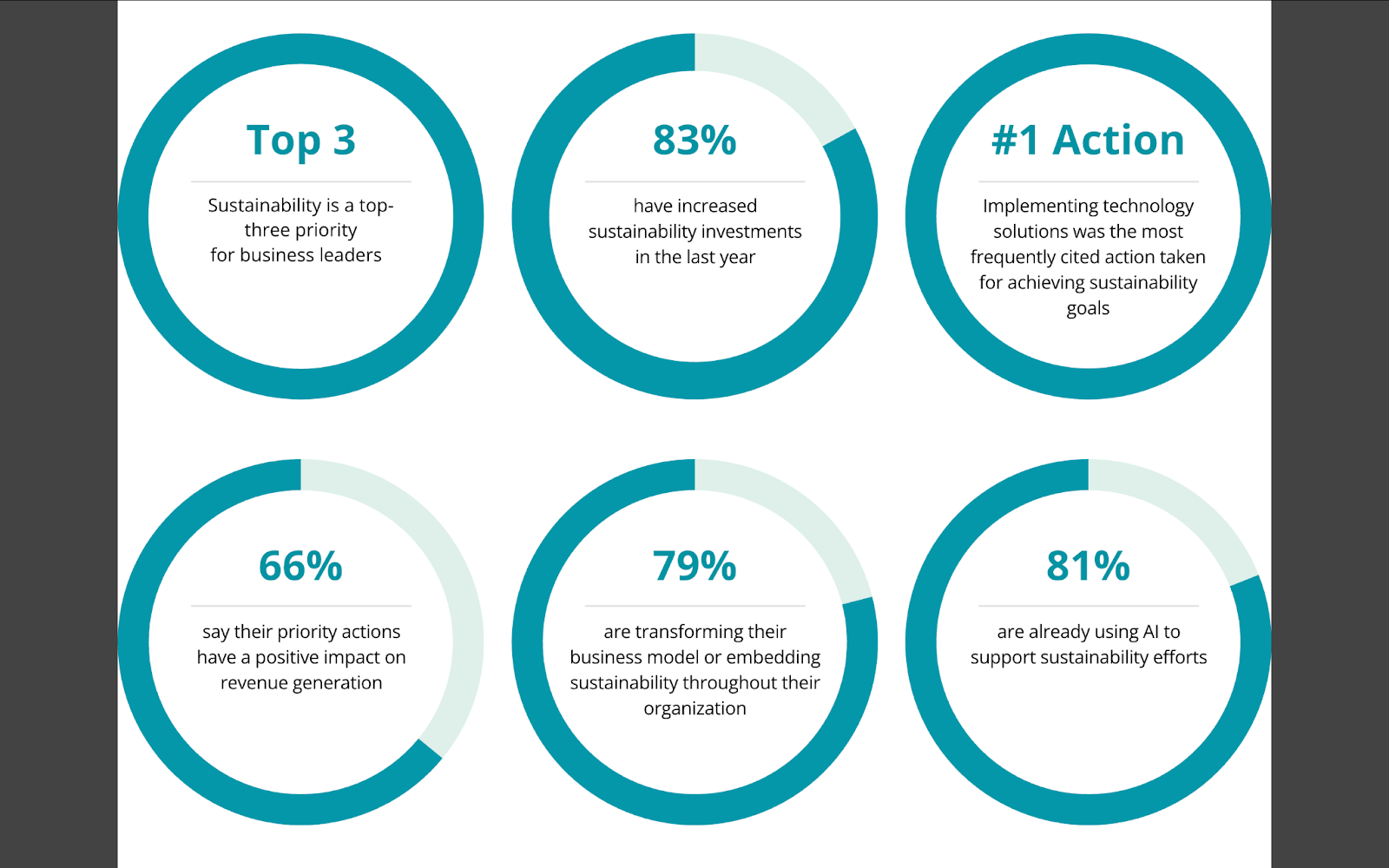
According to the latest Delloite Global C-suite Research, sustainability remains among the top strategic priorities for business leaders, with more than 80 percent of executives increasing related investments in the past year. At the same time, technology adoption and artificial intelligence are ranked among the most critical enablers for achieving sustainability goals. The implication is clear. Sustainability outcomes now depend directly on enterprise data architecture and decision intelligence capabilities.
In our own analysis at Finboot,we explored how transparency is now a capital allocation strategy.Transparency is no longer simply a reputational concern. It is becoming a financial variable that influences access to capital, risk exposure and long-term valuation. Companies able to demonstrate credible, data-driven sustainability performance are positioning themselves more strongly in increasingly volatile markets.
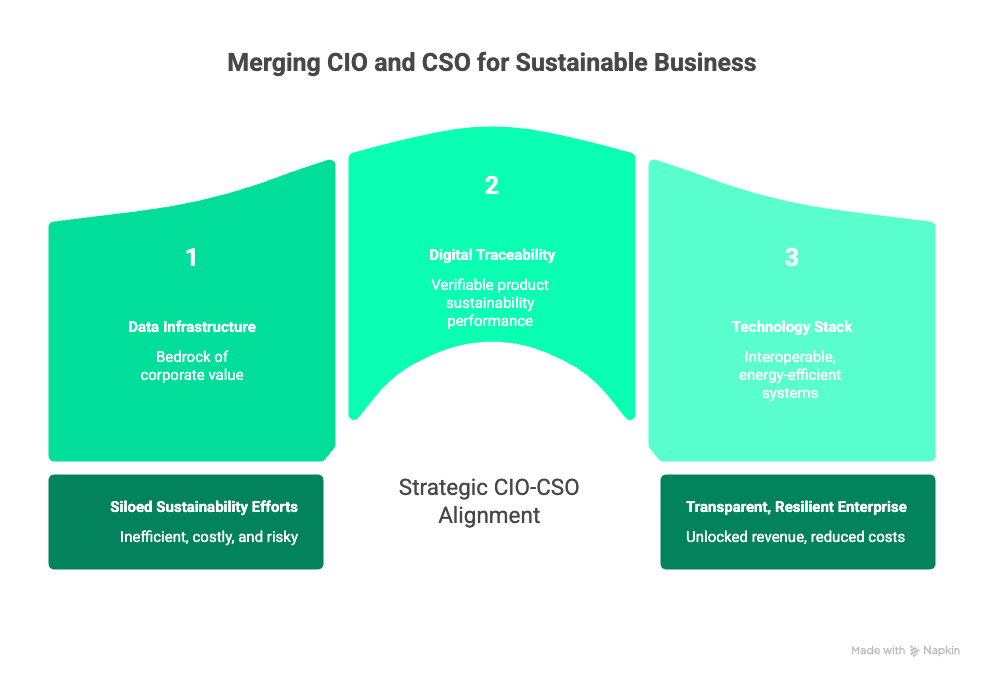
For CIOs, this elevates the data infrastructure they oversee into a core strategic company asset. For CSOs, it transforms sustainability from a compliance exercise into a cross-functional mandate with top line implications.
The Cost of Invisible Supply Chains
Despite rapid digital progress, many industrial supply chains remain structurally opaque. Material blending, multi-tier sourcing networks and fragmented reporting processes still limit the reliability of sustainability data.
This lack of visibility has tangible operational consequences. Recent industry research shows that around 60 percent of organisations consider limited supply chain transparency a major risk management challenge. Without trusted data on material origin, emissions profiles or supplier practices, companies face higher audit costs, slower decision cycles and increased exposure to regulatory disruption. In an environment shaped by geopolitical uncertainty, climate volatility and resource constraints, visibility is no longer optional.
Digital Traceability as an Enabler of Sustainability Goals
Leading industrial organisations are responding by investing in digital traceability systems that connect physical material flows with verified sustainability data. When implemented effectively, these capabilities move beyond compliance and begin to influence core business performance.
In the chemicals sector, for example, companies are deploying mass balance traceability models to verify the integration of sustainable feedstocks into complex production processes. This allows them to meet regulatory expectations while optimising procurement strategies and protecting margin structures.
In energy and advanced fuels, digital chain-of-custody solutions are being used to validate the origin and lifecycle emissions of renewable inputs. This reduces reporting friction and accelerates certification processes across global markets.
In manufacturing and packaging ecosystems, pilot programmes around Digital Product Passports are enabling product-level transparency on recyclability, material composition and environmental footprint. These initiatives are already influencing product design decisions and opening new opportunities for circular business models.
What we are seeing in practice is that traceability becomes a decision infrastructure. It allows organisations to move from retrospective sustainability reporting toward predictive operational optimisation. Advanced analytics and artificial intelligence are increasingly layered on top of this data foundation, helping companies anticipate disruptions, reduce waste and allocate resources more intelligently.
The Regulatory Push
While I still believe market dynamics will soon become the biggest driving force behind sustainability, it is undeniable that at present industrial transformation is strongly influenced by evolving regulatory frameworks. Initiatives such as the Corporate Sustainability Reporting Directive, the Ecodesign for Sustainable Products Regulation and the Carbon Border Adjustment Mechanism are already reshaping procurement models, product development strategies and supplier engagement processes.
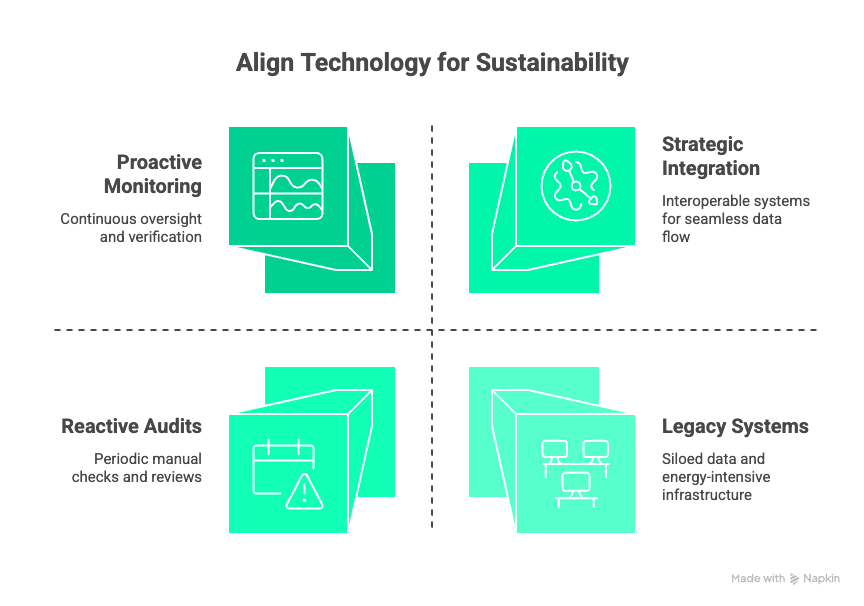
These regulations do more than increase disclosure requirements. They are accelerating the need for integrated governance between sustainability, operations and digital teams. Compliance readiness increasingly depends on system architecture, data interoperability and real-time performance monitoring.
Executives are beginning to recognise that incremental adjustments will not be sufficient. Strategic redesign of processes, technology stacks and organisational collaboration models is becoming necessary to remain competitive.
For a deeper perspective on how regulatory transformation is shaping this evolution, executives can explore our Green Deal 2030 Executive Playbook.
Building the Right Digital Sustainability Stack
To navigate this shift successfully, organisations are focusing on three interconnected priorities.
First, establishing trusted data infrastructure. Distributed ledger technologies and advanced verification systems are being adopted to create tamper-proof records of material provenance and chain of custody, particularly in sectors such as critical minerals, recycling and renewable energy.
Second, selecting traceability models that reflect operational reality. Identity preservation approaches may be appropriate for high-value materials, while mass balance frameworks often provide a pragmatic path for industries dealing with commingled inputs. Tools should be capable of combining different models into the same supply chains.
Third, ensuring interoperability across ecosystems. As supply chains become more collaborative and regulations more stringent, the ability for platforms to exchange data seamlessly will be essential to reduce onboarding friction and audit complexity.
Ultimately, the objective is not technological sophistication in isolation. It is combining tools and resources with the right formula to enable and accelerate business success.
A New Leadership Compass for 2030
The convergence of sustainability and digital transformation signals a broader evolution in C-suite leadership dynamics. Forward-looking companies are reframing sustainability as a driver of innovation, efficiency and long-term value creation rather than as a regulatory burden.
In my experience, the industrial leaders making the greatest progress are those willing to rethink traditional organisational boundaries. They are aligning CIO and CSO agendas around shared objectives, building digital capabilities that enable measurable environmental performance, and embedding sustainability considerations directly into operational strategy.
As industry discussions increasingly focus on themes such as material intelligence, AI-driven supply chain optimisation and circular value chains, one conclusion stands out. Strategic ambition alone will not determine competitive outcomes. Execution capability will. So, my recommendation:
Executive Next Steps:
- Map Exposure: Quantify, if you haven’t yet, your exposure to regulations like CBAM and ESPR.
- Pilot DPP: Start a Digital Product Passport pilot for your highest-risk product category.
- Align Infrastructure: Transition from analog reporting to a blockchain-enabled "single source of truth".
This is why aligning sustainability vision with digital architecture is becoming one of the defining leadership challenges of the coming decade.
++++++
.svg)
.svg)
.svg)


.jpg)
