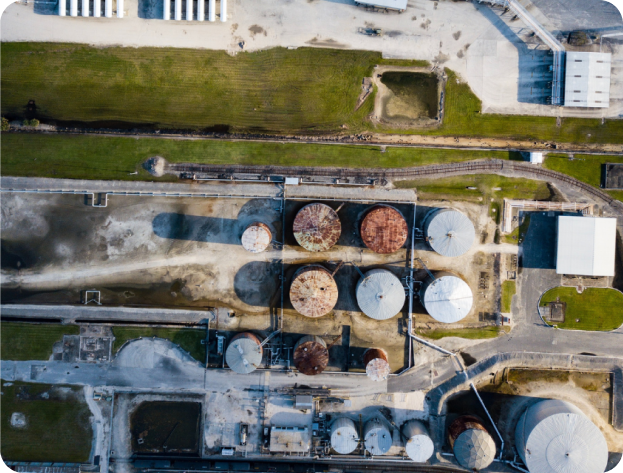
Mass Balance in the Chemical Industry

How to Track, Verify and Scale Sustainable Feedstocks
Mass balance in the chemical industry is a chain-of-custody model that allows companies to track and allocate sustainable or certified feedstocks across production systems where materials are physically mixed.

It ensures that the volume of certified input matches the volume of certified output through verifiable bookkeeping, enabling compliance, certification, and scalable sustainability claims.

Mass balance is a volume-based accounting system where:
- certified and non-certified materials can be mixed
- sustainability attributes are tracked through bookkeeping
- outputs are allocated based on input proportions

The rule is simple:
What comes in (certified) must equal what is claimed (certified output)
The chemical industry sits at the center of the sustainability transition:consumes 14% of oil and 8% of gas globallylinked to 95% of manufactured goods under increasing pressure from:
- RED III
- CBAM
- CSRD
- circular economy mandates

At the same time:
- demand for sustainable products is rising
- but production systems remain complex, continuous and mixed

This creates a fundamental problem:
Companies must prove sustainability… without being able to physically trace materials.
Chemical companies struggle with:
- lack of supply chain visibility
- fragmented supplier data
- difficulty verifying sustainable inputs
- inability to scale circular feedstocks
- audit complexity

Mass balance solves this by enabling:
✔ traceability without segregation
✔ verifiable sustainability claims
✔ certification alignment (ISCC, REDcert, etc.)
✔ scalable circular production

It is not optional anymore — it is becoming market access infrastructure.

How Mass Balance works
(step-by-step)

1. Sustainable input registration

Bio-based or recycled feedstocks are recorded at entry

3. Allocation

Sustainability attributes are assigned to outputs

5. Certification

Auditors verify compliance (ISCC, REDcert, etc.)

2. Production mixing

Materials are processed in existing infrastructure

4. Bookkeeping

Volumes are tracked across batches, sites and time

This is fundamentally a data problem, not a physical one

Chemical industry

circular plastics
polymers
specialty chemicals

Energy

biofuels (HVO, SAF)
biomethane tracking

Manufacturing

sustainable materials
recycled content verification

How to Implement Mass Balance in the Chemical Industry: Systems, Steps and Requirements

Implementing mass balance in the chemical industry requires a digital system that tracks sustainable feedstock inputs, allocates sustainability attributes across production, and generates audit-ready reports aligned with certification schemes such as ISCC and RED III. The process involves integrating supplier data, production systems, and compliance workflows into a unified traceability infrastructure.

Why digitalization is critical

Mass balance does not work manually at scale.

Traditional approach:
- spreadsheets
- siloed data
- manual audits

Result:
- errors
- audit risk
-lack of credibility

Digital systems enable:
- automated bookkeeping
- real-time traceability
- audit-ready reporting
- prevention of double counting
- certification alignment

This is why the industry is moving toward digital traceability infrastructure.

Real-world use case

SABIC → Circular plastics at scale

- batch-level traceability from waste to packaging
- enabled TRUCIRCLE™ portfolio
- improved partner integration and credibility
Proof that mass balance enables circular economy at industrial scale

MOEVE → Sustainable chemicals transparency

- automated mass balance tracking
- sustainability credit management
- full linkage between inputs and outputs
Demonstrates operationalization of sustainability

Acelen → Biofuels traceability

-tracking sustainable feedstock across energy value chains
- enabling emissions verification and compliance
Extends mass balance into energy transition markets
Mass balance is embedded in:
ISCC
RED II / RED III
REDcert
Better Biomass

These frameworks:
- require traceability
- validate sustainability claims
- enable market access

Without mass balance, certification is not scalable
Companies implementing digital mass balance achieve the following:

Revenue
- access to premium markets
- ability to sell certified products

Cost
- reduced compliance costs
- automated reporting

Risk
- audit readiness
regulatory alignment

Strategy
- enable circular business models
- support decarbonization

Common mistakes companies make

Powerful, self-serve product and growth analytics to help you convert, engage, and retain more users. Trusted by over 4,000 startups.
treating mass balance as a reporting exercise
ignoring integration with ERP and production
relying on spreadsheets
underestimating audit complexity

Strategic insight

Mass balance is not just compliance.
It is the infrastructure layer for sustainable product markets.

Without it:
no credible claims
no certification
no premium positioning

Frequently asked questions (FAQ)

Everything you need to know about mass balance for chemical industry.
What is mass balance in chemicals?
A traceability model that allows mixing materials while ensuring certified input equals certified output through accounting.
Is mass balance required for RED III?
Yes. It is a recognized chain-of-custody model for renewable and recycled materials.
Why not use segregation instead?
Because chemical production systems are continuous and mixed, making segregation impractical and expensive.
What systems are needed for mass balance?
Digital platforms that track inputs, allocation, certification and reporting across supply chains and production.
Can mass balance be audited?
Yes. Certification schemes like ISCC verify compliance through audit processes.

Still have questions?

Can’t find the answer you’re looking for? Please chat to our friendly team.

MARCO Track and Trace could enhance the ReVentas and SABIC collaboration by ensuring recycled plastic quality, improving process efficiency, and building trust with stakeholders.

Learn more about how Finboot’s traceability solutions are transforming the Petrochemical Industry

Mass Balance & Bookkeeping: Tracing Sustainable Products from Mixed Feedstocks

Download it

Learn more about how Finboot is leveraging a mass balance to enable a circular economy, read our e-book

Mass Balance Optimization: Why Green Chemicals Are Going Digital

Read it
Untitled UI logotextLogo
Join our newsletter to stay up to date on features and releases.
We care about your data in our privacy policy.
Thank you! Your submission has been received!
Oops! Something went wrong while submitting the form.
© 2025 Finboot LTD. All rights reserved.